
Dynamic cables and connectors for robotics: what to check
Bending, torsion, connectors: the points that make the difference in a joint.
هذا المقال متاح باللغتين الإنجليزية والفرنسية.
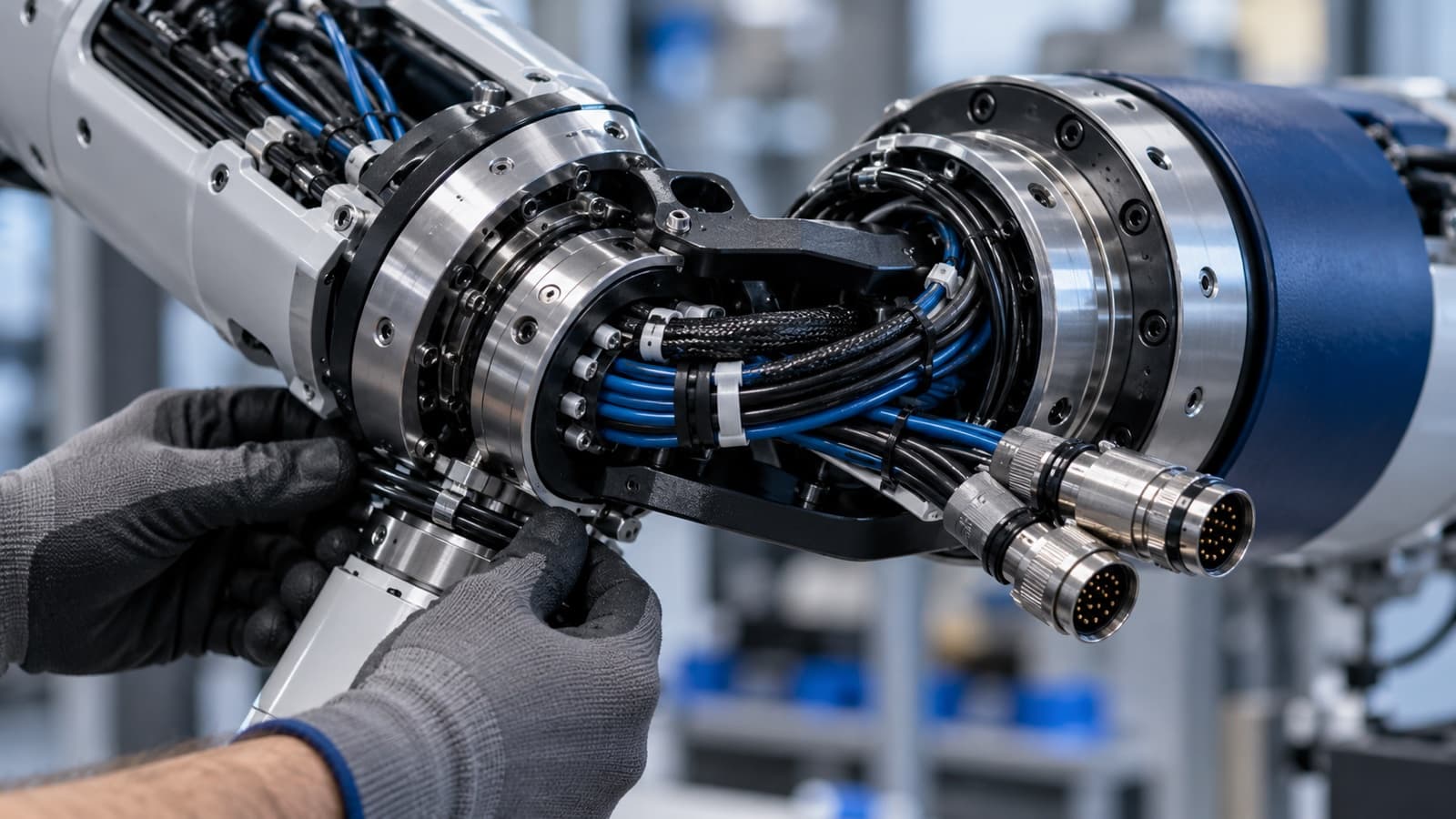
In a robot, cables move with every motion. A cable designed for fixed installation can break quickly in a joint. Wiring failures are often intermittent and hard to diagnose, so they are best avoided when choosing the component.
Bending or torsion
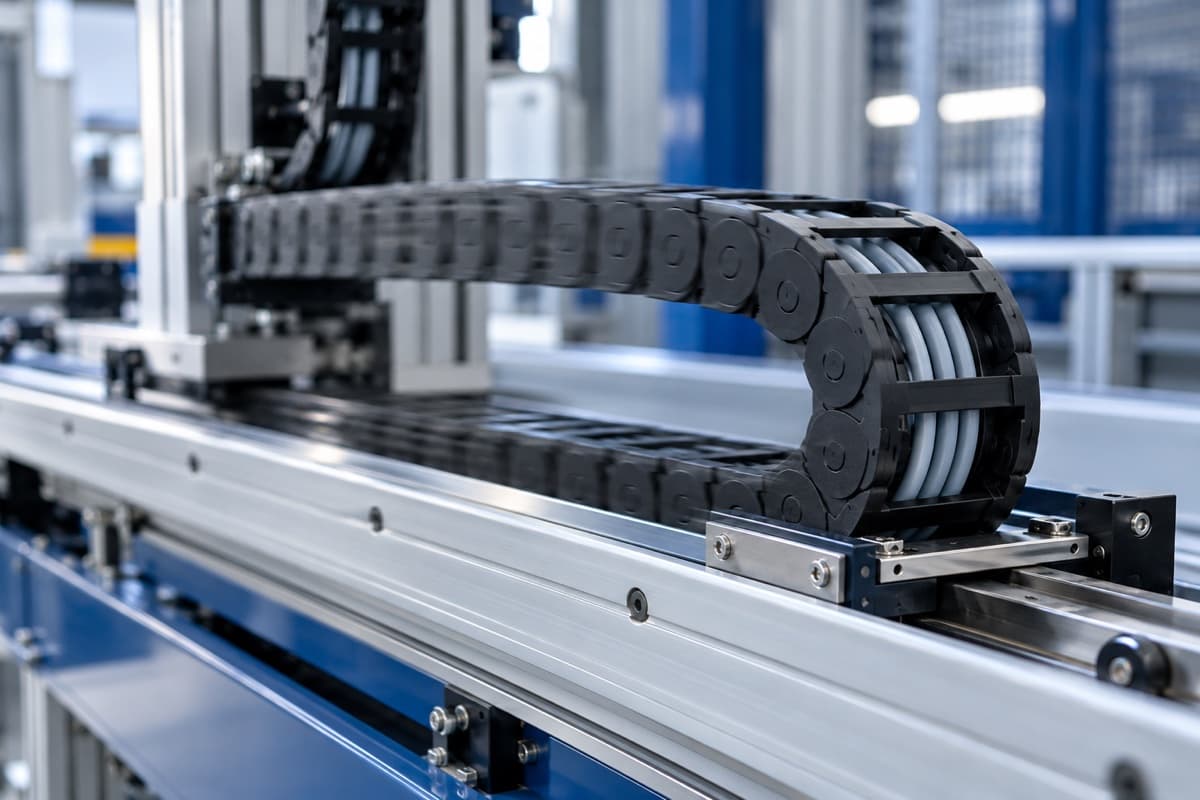
- Bending, in a cable carrier or along an arm, requires a cable designed for a given bending radius.
- Torsion, in a joint rotating around its axis, requires a cable designed for a given torsion angle per length.
- A cable can be designed for one, the other or both: ask explicitly.
What to ask
- The stated number of cycles and, above all, the test conditions: radius, angle, speed, acceleration, temperature.
- The jacket material and its resistance to oils and UV if the environment requires it.
- Shielding, for encoder signals and communication buses.
- For connectors: number of mating cycles, locking, ingress protection rating.
If you order a complete harness, send the wiring diagram and exact lengths, and ask for a sample before series production: it is the simplest way to check crimping and marking.